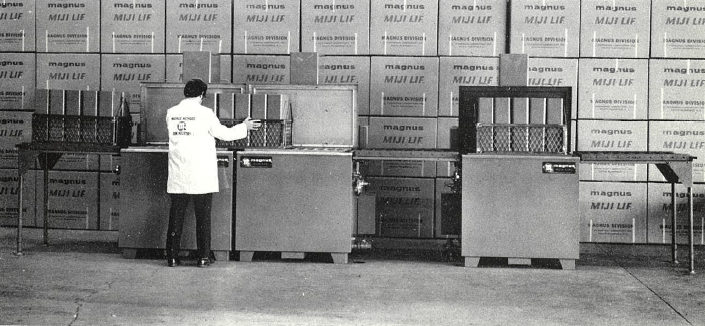
If you have ever searched “immersion cleaning tank” on the internet, then odds are you already know how overwhelming the results can be. The top search results display companies selling their various products, however not many of them provide unbiased information on the available options. Therefore, we decided to use the knowledge we have gained from over 100 years’ experience in the industry to create this quick guide to immersion cleaning tanks.
What is Immersion Cleaning?
The manufacturing process often covers parts in oils, metal fines, and other impurities that affect the quality of the part. These impurities must be removed before performing processes such as coating or surface finishing, and certainly before passing quality inspection. Parts with acute angles, heavy weights, large surface areas, and blind holes also present cleaning challenges. Immersion cleaning is a process used to thoroughly clean those manufactured parts by completely submersing them in water or cleaning solutions. Smaller parts are often placed in a special type of basket prior to entering the tank, while larger parts may rest solely on a stationary or mobile platform in the bath. Immersion tanks come in many shapes, sizes, and materials of construction. The cleaning process, production floor layout, chemicals used, etc. always determine which option is the best for individual needs.
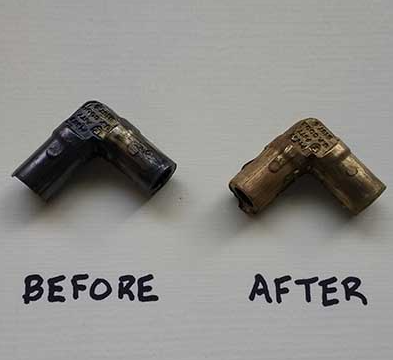
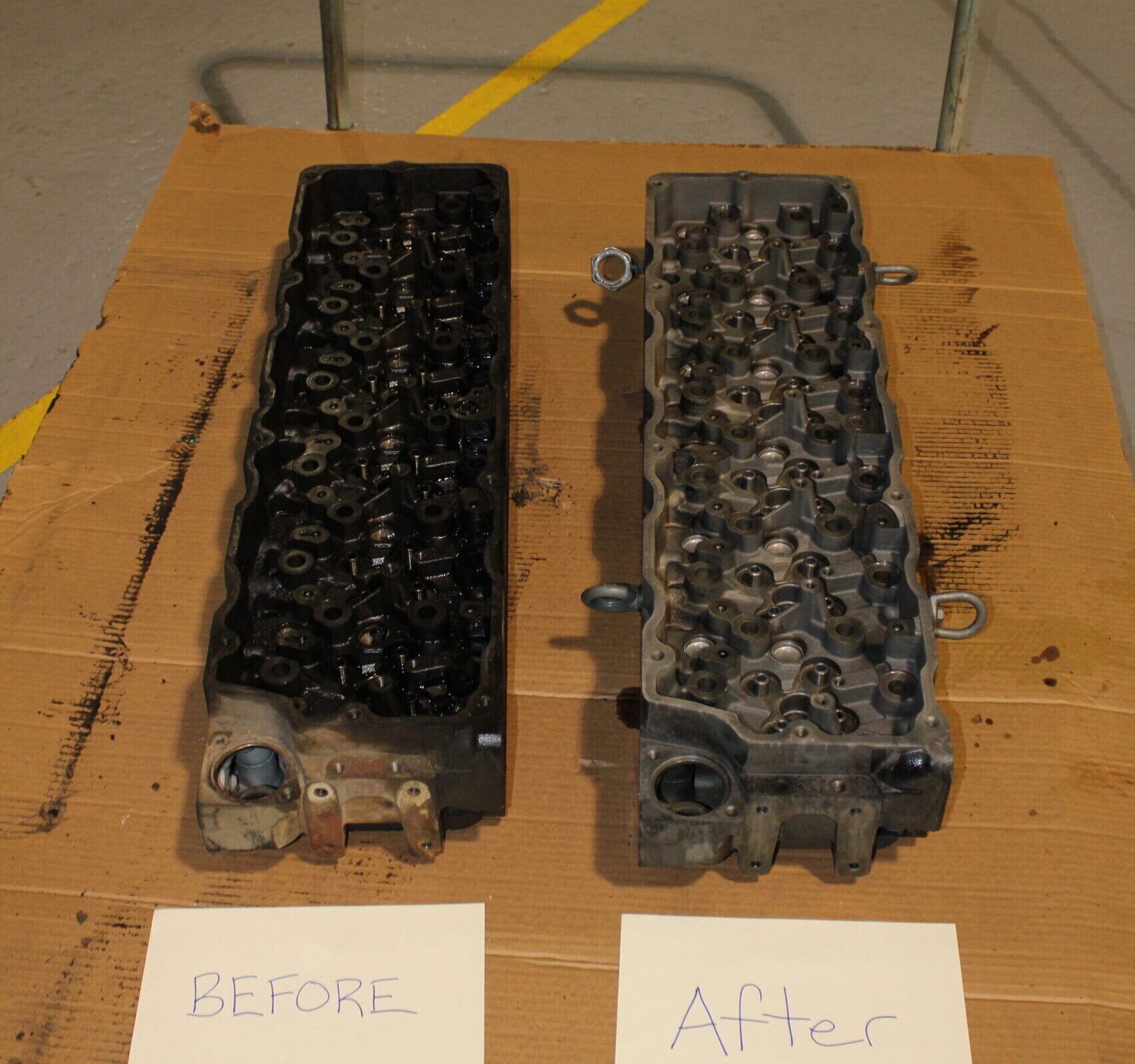
Left: Side-by-side comparison of parts before and after being cleaned in an Agitation Immersion Tank.
Right: Side-by-side comparison of parts before and after being cleaned in an Ultrasonic Immersion Tank.
Five Most Common Immersion Cleaning Tanks on the Market Today
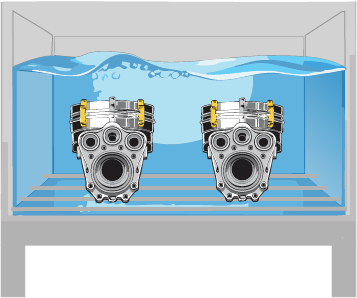
Basic Immersion
Parts are placed into a tank or tub to soak, completely submerged in water or chemical solutions.
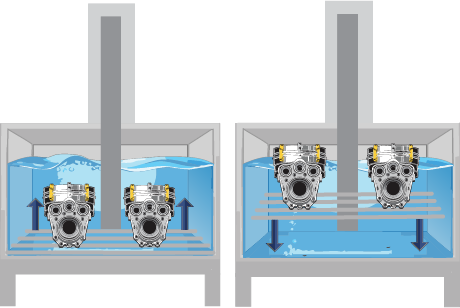
Agitation Immersion
Parts are placed on a mobile platform that moves up and down within the water or chemical solution. Smaller parts are often placed in a special basket to keep them secure while on the platform.
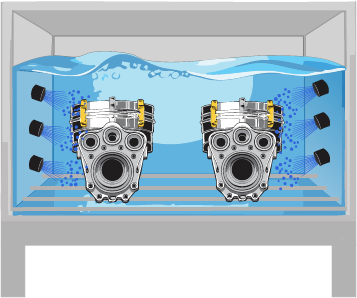
Turbulation
A spray and pump system are used to circulate the solution in the tank around the parts. This method can also be combined with agitation immersion.
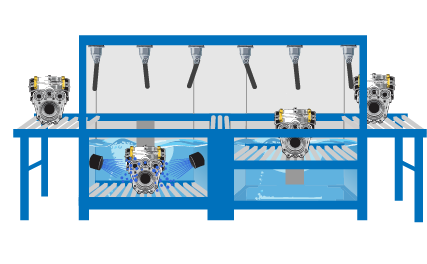
Multi-Stage Immersion
The ultimate cleaning system: multi-stage immersion lines are built to send parts through different stages of the process with minimal operator interaction. Soak, wash, dwell rinse, and heated drying can all be completed with the press of one button.
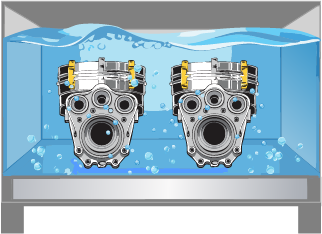
Ultrasonic Immersion
Powered by an external generator, flat ultrasonic transducers are fully submerged in the immersion tank. Ultrasonic waves generate vapor bubbles that eventually collapse under high velocity, removing the particulates from the parts. This process is called cavitation.
Optional Features & Upgrades
Once the base operation of the Immersion Cleaning Tank has been chosen, there are several other features that can be added to boost cleaning power.
Heating
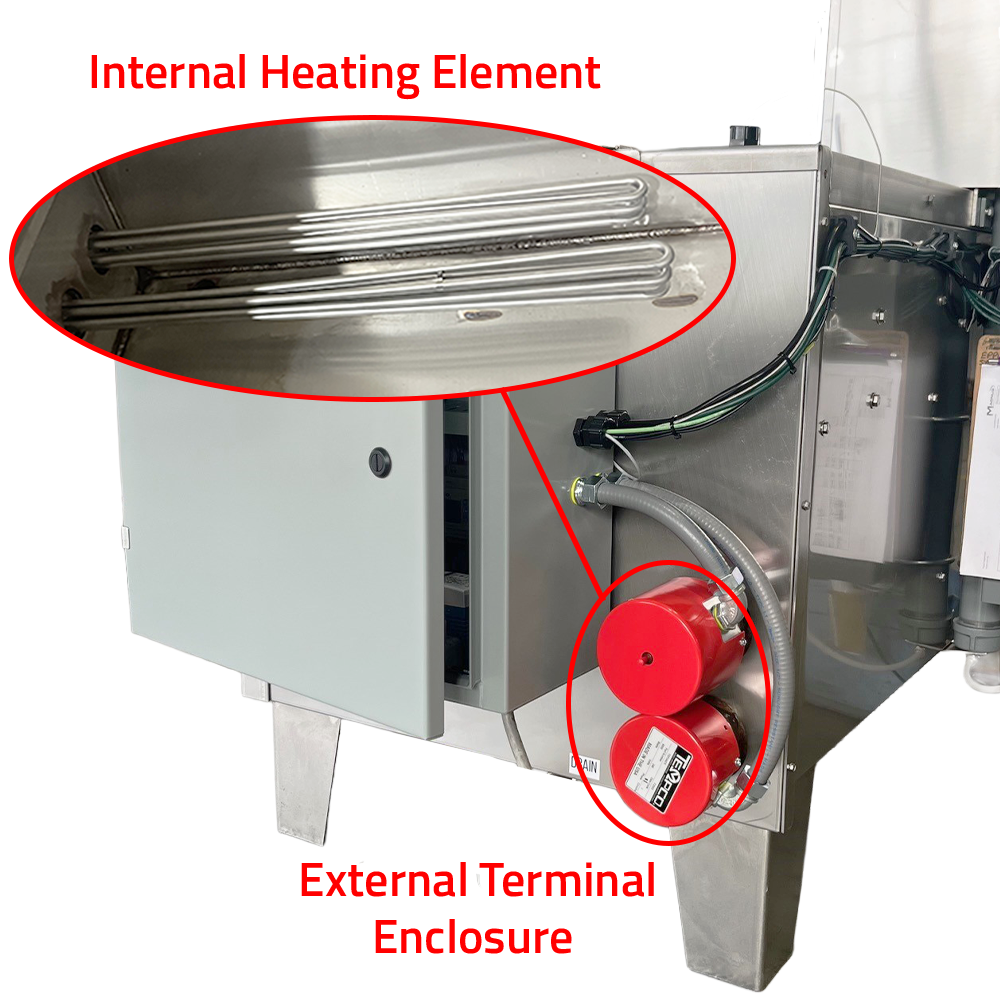
Adding heat to an immersion tank can make the cleaning process more efficient. Hot water naturally cleans more efficiently than cold water, and some cleaning chemicals perform better when heated. Immersion heaters are ideal for tank heating, as they apply heat directly to the liquid or process.
Automatic Tank Lid
The addition of an automatic tank lid can ease operator strain, streamline a multi-stage cleaning process, or open a tank lid that is too large and heavy to be manually lifted.
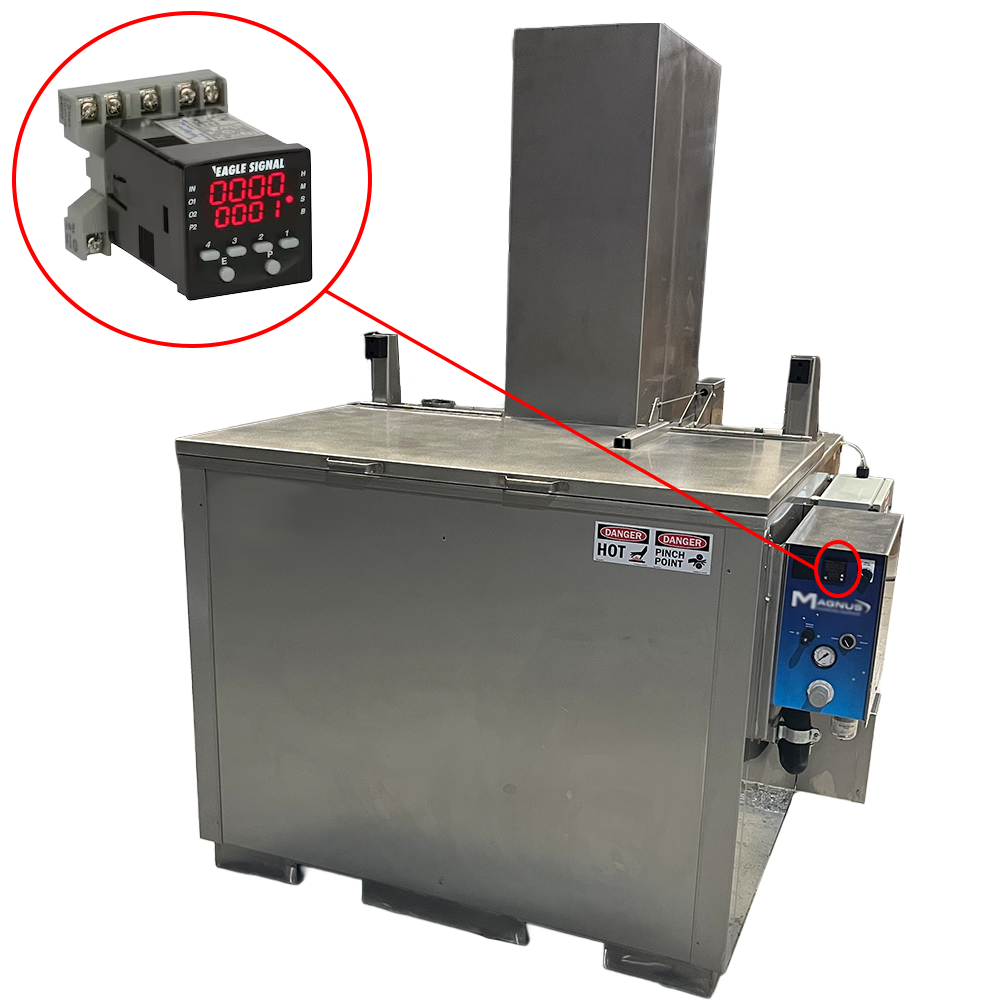
Programmable Timers
Wash cycles take time and often do not need to be monitored. This means operators can perform other tasks while waiting for the parts to be cleaned. Programmable timers can be installed and set to regulate cycle time, meaning the wash cycle will run its course and then automatically stop once complete. Another type of programmable timer can be used to preheat the tank, so the bath is up to temperature when the operator is ready to wash parts.
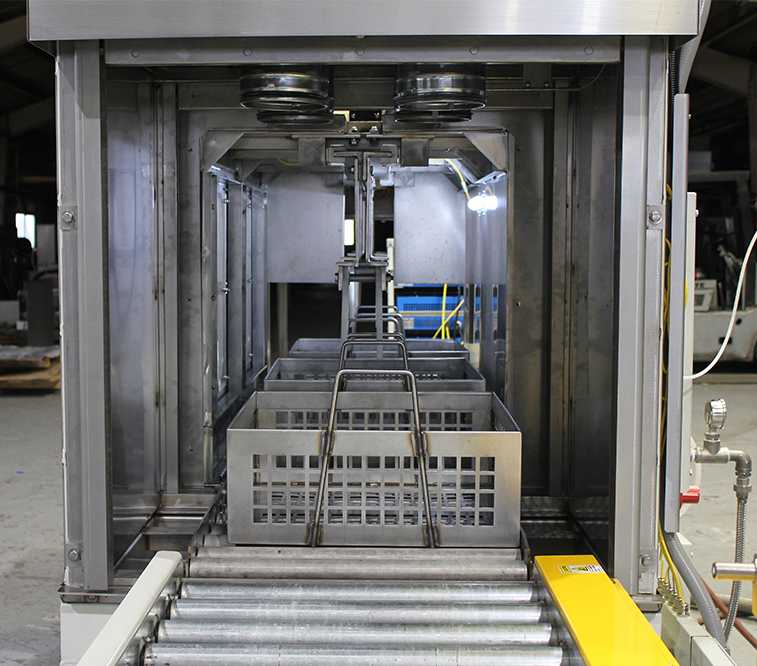
Platform Upgrades
Grate platforms are the industry standard, but other options are available
as upgrades. Roller platforms make it easier to move parts because they
rotate independently of each other, reducing drag. In multi-stage systems,
a platform pass-through guide can be used to “push” the parts from one
stage to the next.
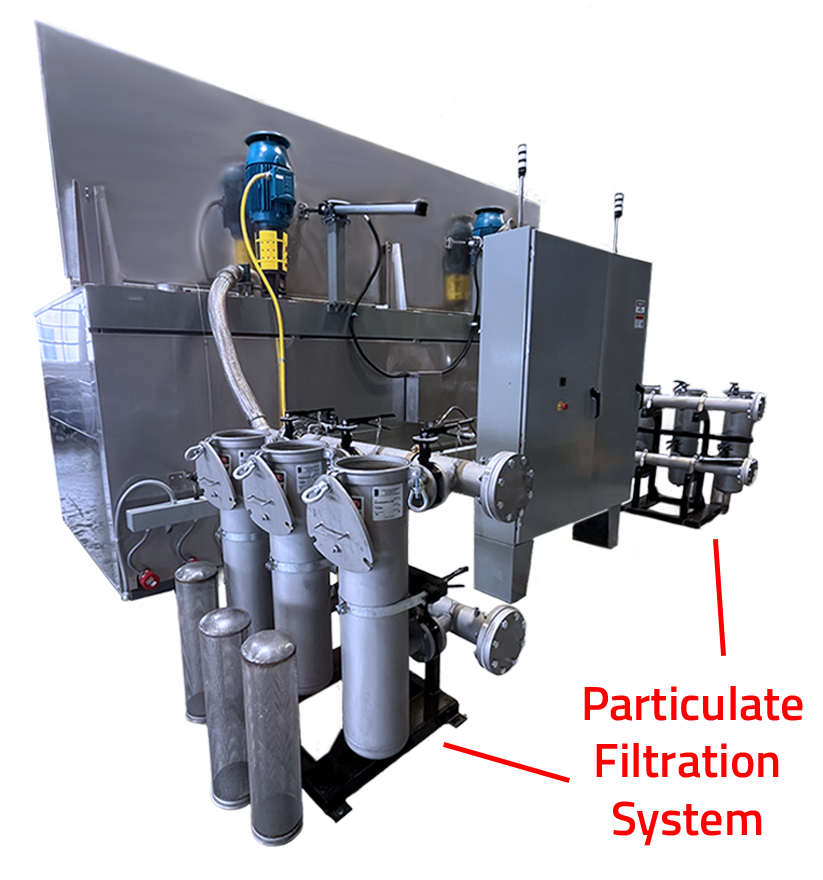
Particulate Filtration
Stand-alone or tank-mounted filtration systems work with the immersion tank to take the cleaning process to the next level of efficiency. They draw water or chemical solution from the tank, pump it through a filtration system to remove particulates, and pump the filtered water or solution back in. This extends the life of the bath, resulting in a more consistent cleaning operation.
Oil Removal Systems
When consistently washing parts covered in oil or grease, an oil removal
system is beneficial. They help extend the life of the bath and make the
cleaning process more efficient. Oil coalescers are a separate unit that is
hooked up to the tank, and their function is to separate emulsified oils from
the cleaning solution. Oil surface skimmers or oil skimmer belts can be installed inside the tank to collect oil from the water and dispose of it.
Other features worth mentioning:
- Automatic water addition
- Low water level process lockout
- Partial tunnel enclosure for water vapor control
- Basket or custom load fixtures
- Plastic liner for special application
- Pumped or gravity counter flow for multi-stage
- Fusible link (fire suppression aid)
- Insulated carbon or stainless steel construction
- Pneumatic or electric agitation control
What Industries Commonly Use Immersion Parts Washers?
From top automotive companies to family-owned machine shops, many industries benefit greatly from the use of an immersion washer or multi-stage system. Some examples include:

How Do I Know if Immersion Cleaning is Right for My Business?
Immersion cleaning may be able to help if your production process struggles with problems such as:
- Quality control
- Product inconsistency
- Clearing particulate from small holes
- Large volumes of parts to be cleaned
- Lengthy & strenuous parts cleaning processes
- Cleaning heavy and/or oddly shaped parts
- Chemicals used are too dangerous to clean by hand
- Short-staffed/no time to manually clean parts
With so many variables and options involved with immersion cleaning, it is always a good idea to contact a professional in the industrial parts washing industry. If you’d like, you can even call us! Our contact information is listed below.
Thank you for reading our guide! Check out our other articles for even more on industrial parts washing!

(The availability of features listed above varies on Immersion Tank Manufacturer. Please note that several factors may be introduced by the operator or manufacturer of any application and immersion tank that will alter the conditions of the above listed. We are not liable for improper usage of any of the above-mentioned equipment or materials, nor do we guarantee any specific results.)