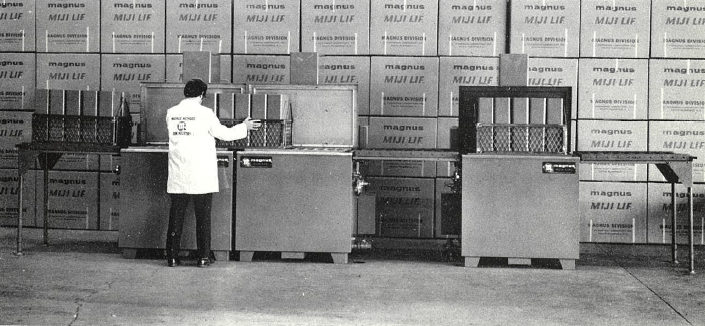
Utilizing pneumatic power for immersion platform agitation offers many benefits, particularly in applications where safety, durability, and cost-effectiveness are priorities. Pneumatic panels use air actuated valves instead of electricity to control mechanical movements, making them well-suited for a wide range of industrial environments. In this guide, we will dive deeper into a pneumatic panel designed specifically for platform agitation in immersion parts washers.
How Does Pneumatic Agitation Work?
Compressed air from an external source enters the pneumatic panel through piping and connectors, providing efficient air delivery without leaks. It is then directed through a filter which helps remove contaminants and moisture for clean operation. From there, air flows to a regulator to ensure a steady air supply, control fluctuations, and maintain proper system pressure. Then it heads to a lubricator which adds a controlled amount of lubricant to reduce wear on internal component. After the air is lubricated, it is ready for the control valves which direct air into/out of a cylinder, converting the energy from the compressed air into mechanical motion. This action powers platform functions such as Soak, Agitate, or Raise, as well as a Stroke Selector, which sets the desired stroke length of the platform during the agitation cycle (example shown in videos below).
Benefits of Pneumatic Agitation
Now that we have explained how the pneumatic panel works, we can unlock the benefits of using one for platform agitation in an immersion parts washer!
Safety & Hazardous Environments
- Reduced Fire and Explosion Risk: Since the panel’s primary function is controlled without electricity, it eliminates the added risk of sparks that can ignite flammable or explosive gases, dust, or chemicals. It is still important to follow proper procedures for handling electrostatic discharge from moving parts.
- Contamination Prevention: Using filtered, compressed air instead of fluids (such as hydraulic oil) prevents contamination and possible oil spills.
Reliability & Durability
- Resilient in Harsh Conditions: The robust, durable construction of pneumatic components allows them to withstand harsh industrial environments. High humidity, dust, and temperature fluctuations have less effect on these components.
- Lower Overload Risk: Systems relying on electric motors can often become overloaded when drawing too much current, a common failure point in electric motors. Pneumatic panels use fewer components, reducing overload risk while lowering costs.
- Long-lasting Components: Pneumatic components are known for their long service life, and consistent, dependable operation. When consistently provided with clean, dry air supply, pneumatic panels are known to complete thousands of cycles with minimal wear.
- Minimal Sensitivity to Power Outages: With a compressed air reserve, a pneumatic system can continue to operate through momentary electrical outages, reducing production interruptions.
Cost Effectiveness
- Lower Upfront Costs: Pneumatic systems generally have a lower initial investment compared to their hydraulic counterparts.
- Reduced maintenance expenses: The mechanical simplicity and durability of pneumatic components lead to fewer repairs and replacements, significantly lowering long-term maintenance costs.
- Durability from Materials: High-quality materials such as stainless steel, polycarbonate, and resin provide excellent resistance to stress and environmental factors.
- Simple Maintenance: Pure mechanical solutions tend to be robust and only require periodic maintenance, making them easier to keep in working condition.
- Simpler Repairs: Because the components are straightforward and modular, repairs are often faster and less expensive than more complex hydraulic or electric fixes.
Simplicity & Flexibility
- Ease of Installation: Pneumatic panels can be engineered with a relatively simple design and few complex components, which makes them easy to assemble and install.
- Quick and Repetitive Motion: The high flow rate capabilities of compressed air allow for fast and highly repetitive movements, which increase productivity in parts cleaning applications.
- Fewer Placement Restrictions: Pneumatic panels do not need electrical power to run, which is extremely useful if the location of the immersion parts washer does not have a power supply readily available.
- Meet Modern Industry Demands: Utilizing compressed air for mechanical control not only meets operational demands but also aligns with the evolving needs of modern manufacturing environments.
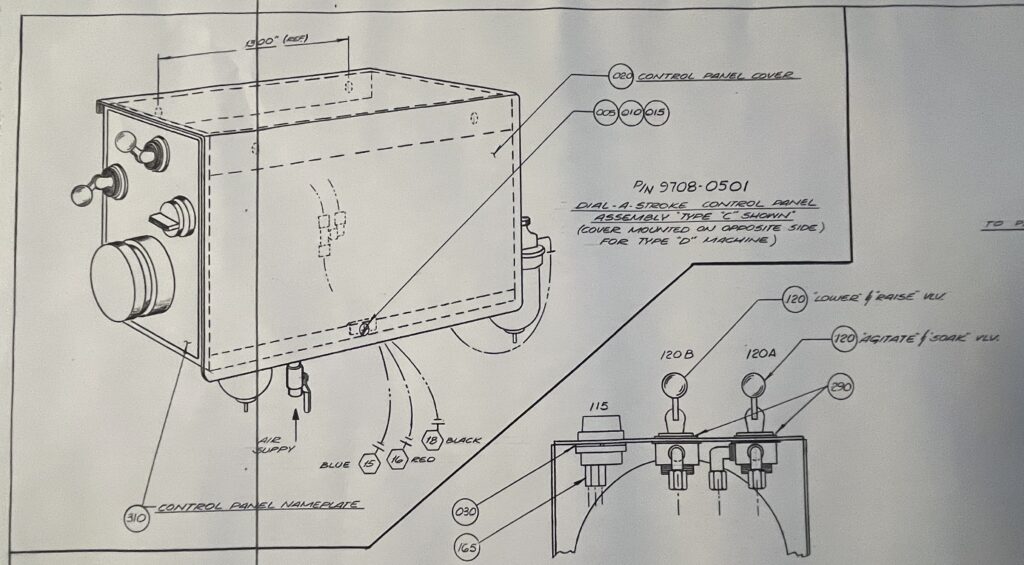
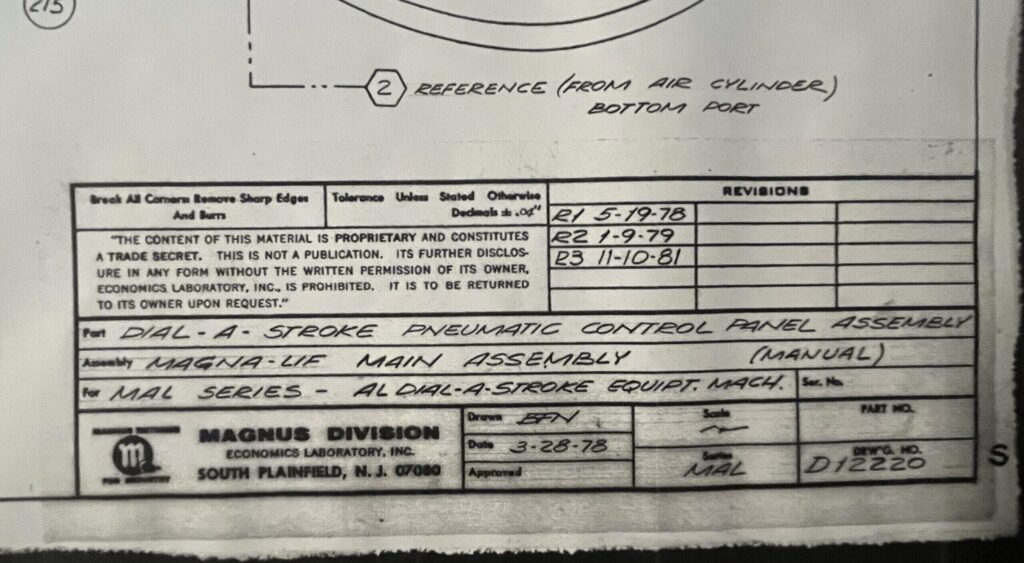
(Pictured Above: One of the original prints – circa 1978 – for our trademark pneumatic panel, the Magnus Dial-A-Stroke.)
Want to Know More About Pneumatic Panels?
We build our own here at Magnus Engineered Equipment, and we would be happy to chat with you! We have a lot of experience with pneumatics, but our favorite is a pneumatic panel we engineered called the Dial-A-Stroke. It is featured in the photos and videos in this article, and there are over a thousand in operation today!
Some benefits of the Magnus Dial-A-Stroke pneumatic panel are:
- Engineering Expertise: Magnus has a global reputation for high-quality engineering and robust components that undergo intense testing to meet rigorous global standards.
- Product Breadth: Magnus stocks a wide range of pneumatic components – from replacement valves to air preparation products – allowing for a completely tailored and integrated solution delivered to you quickly.
- Technical Support: We provide friendly, responsive, and reliable support from the folks who build the equipment!
- Repair Services: If your Magnus pneumatic panel needs repaired, you can send it to us, and we will fix it at our facility! If we cannot fix it, we will tell you exactly why and guide you through the process of acquiring a new panel.
